My hammock was my window on to the valley: a new type of walking trail in the Swiss Alps
The world’s first hammock hiking trail in southern Switzerland takes
hikers into quiet corners of the Alps – with their beds in their
backpack for lazy pit stops and overnight stays
It
was a summer’s morning in the Lepontine Alps in Ticino, Switzerland’s
Italian-speaking canton, and there was the vague threat of a storm on
the horizon. I was already out on a trail through larch and hazelnut
forest, backpack shouldered, aiming for a mountain pass. Up ahead, a
herd of short-haired goats grazed, their bells chiming merrily, while
behind me the peaks that tower over the Maggia Valley shuffled in and out of view from behind the clouds – each top grimacing, stone teeth chipped and bared.
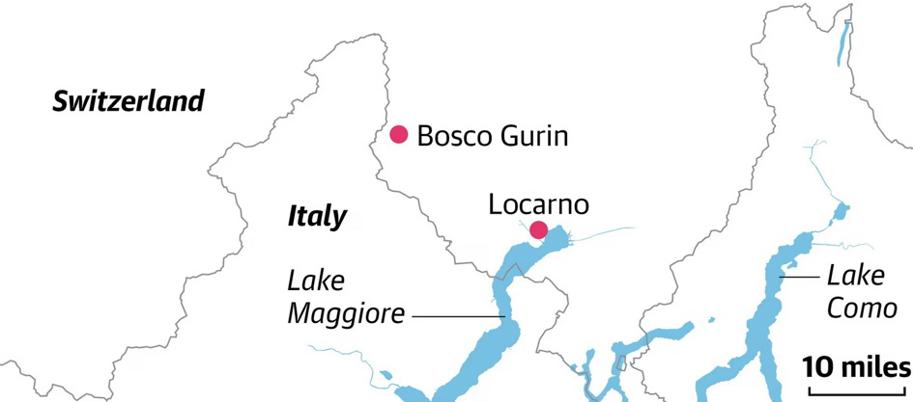
I hike in Switzerland every summer, but this time I’d been drawn to a
new adventure, billed as the world’s first hammock hiking trail, west of
popular Locarno. Launched last year, it begins in the village of
Bosco Gurin and appeals to those who like combining vertiginous hikes with the more
horizontal pastime of lounging in a hammock. It’s low-key, low-impact
travel, offering a chance to get to know one of Switzerland’s most
extraordinary valleys.
I had scheduled a swim at the first hammock, a snack at the second, a rest at the third, and ideally, a nap at the fourth
So far, the project, called Ggurijnar Hermi,
has a dozen stations equipped to take one or more hammocks, each site
measured for ideal span and height, with fixed rubber straps attached to
pine trees, and clip-on carabiners for split-second set-up. The sites
are also chosen for their soothing views. One is an easy uphill stroll
from Bosco Gurin’s 15th-century church. Another, with space for up to
seven, sits by a riverbank, with firepit and woodshed stocked with
timber. Others are scattered on the upper valley’s signposted trails. My
plan was to walk the whole circuit, which a hiker of average fitness
can tackle in around two days. It meant committing to the elements and
re-evaluating the idea of time well spent in the mountains.
I began with an anticlockwise ramble to four of
the sites, including one directly below the 2,137-metre Passo Quadrella,
a mountain col offering a quick escape route into Italy. I had
scheduled a swim at the first, a snack at the second, a rest at the
third, and planned to sleep at the fourth, by the river.
In
my rucksack was a lightweight rented hammock (£14 a day/£35 a night, a
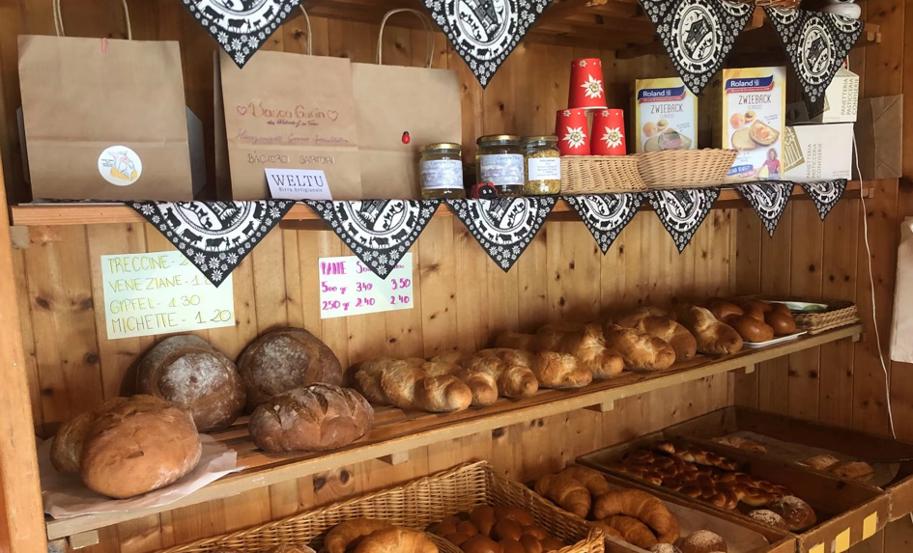
map is also provided) from the Panetteria Sartori bakery (one of three
places in the village that stocks them), which was also handy for
picking up supplies – a nut-filled pastry felt essential.
I walked uphill from the village and soon found the first set of support points, dangling over a natural pool
The hammock trail is a community-spirited
initiative and part of the idea is to engage, support and communicate
with locals, so they can share their passion for the valley’s quiet
places with outsiders.
Before setting out, I’d
chatted to the project’s architect, Zita Sartori, who was inspired to
create the trail and share some of her favourite spots after being given
a hammock as a birthday present during lockdown in 2021. “Hammocks are a
great tool to understand the landscape in a new way,” she told me. “The
point is not to post photos on Instagram. It is to stay outside and
think differently.”
...The hammock trail is a community-spirited initiative and part of the idea is to engage, support and communicate with locals
...
Alone, I walked uphill from the village and soon
found the first set of support points, dangling over a natural pool. The
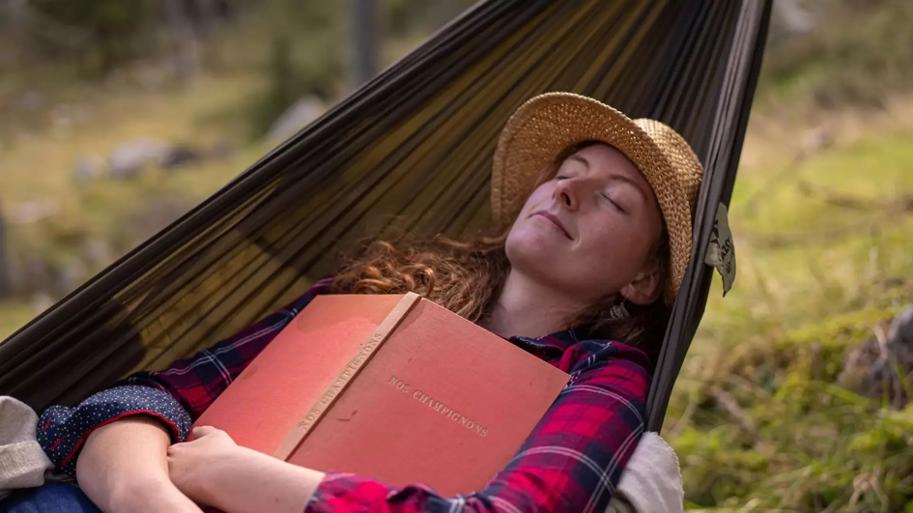
ritual of unfolding and hanging my cradle was simple, and I thought
about surrendering my day to a long, lazy afternoon. The pool was clear
but looked very cold. Instead of a swim, I simply swayed back and forth
above it like a metronome, listening to its sounds in silence.
The
air turned drizzly and I pushed further up the mountain towards the
second station, hidden in a belt of trees. A red kite soared. Under a
pop of blue from behind the clouds I unfurled the hammock again. Ahead I
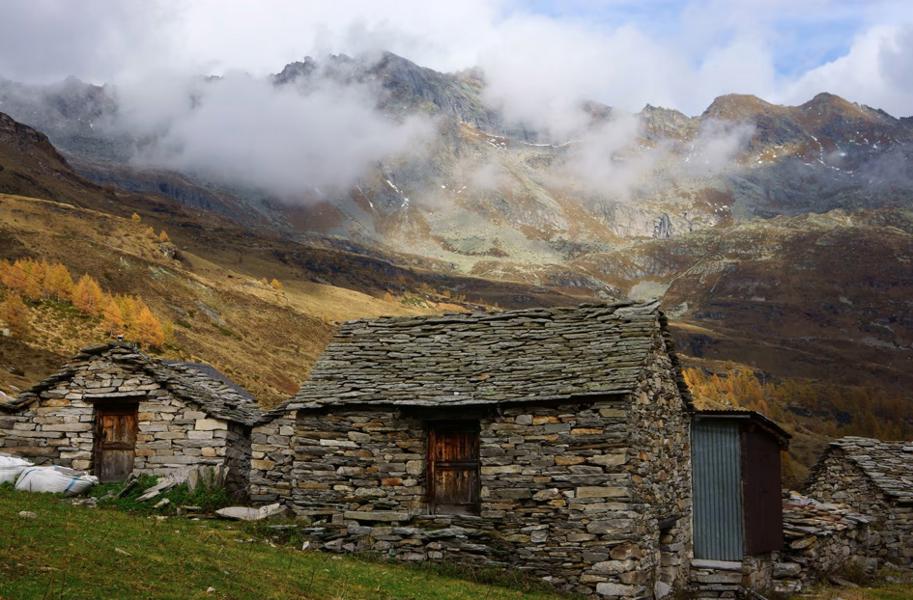
could see Grossalp, a huddle of empty stone houses built around 1235 by
Walser settlers, who came east from the canton Valais of to escape conflict with feudal lords. To me, it looked like a mini kingdom, almost existing outside history.
“The Walsers didn’t want to own the land; they
wanted to live simply, quietly and independently without taking anything
away from the land,” Francesca Pedrocchi, vice-president of Bosco
Gurin’s Museum Walserhaus,
told me before I began my hike. We can still learn something from them
today, she added, about mindfulness towards the environment. In some
small way, it felt like I was following in her ancestors’ footsteps,
continuing their migration and starting again in a new place each time.
By
mid-afternoon, I was swinging beside a waterfall below Passo Quadrella.
I’d been prepared to spend the rest of my day there, contemplating
moody clouds and listening to the slap of water on rock, but storm
clouds had gathered and, with heavy rain now forecast, I made the steep
descent at pace. The drizzle turned into a storm, so instead of slinging
my hammock in the open air by the riverside, I made a beeline for Bosco
Gurin. Some compensation lay in the fact that the village’s main
employer, Hotel Walser, balances community engagement with sustainability, and its kitchen firmly supports local farmers.
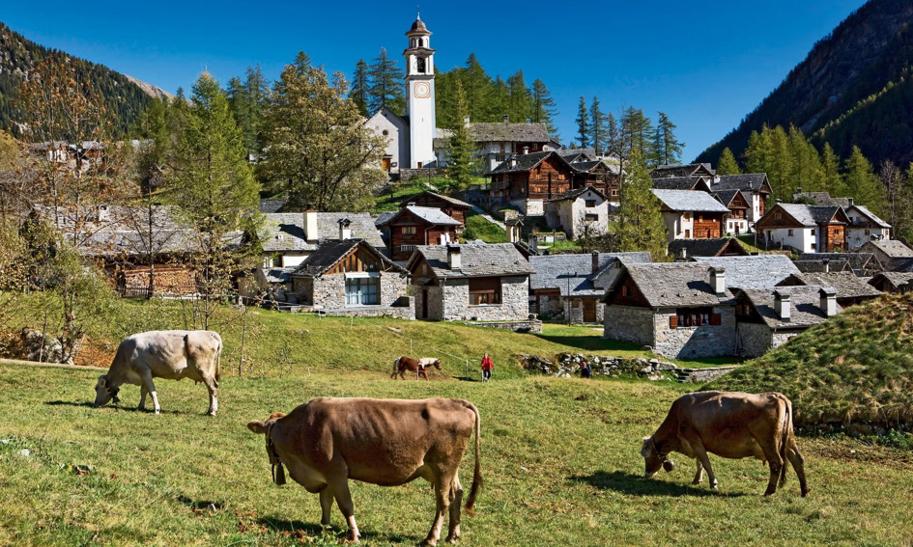
Stone streets led to fountains where locals have filled their buckets for centuries
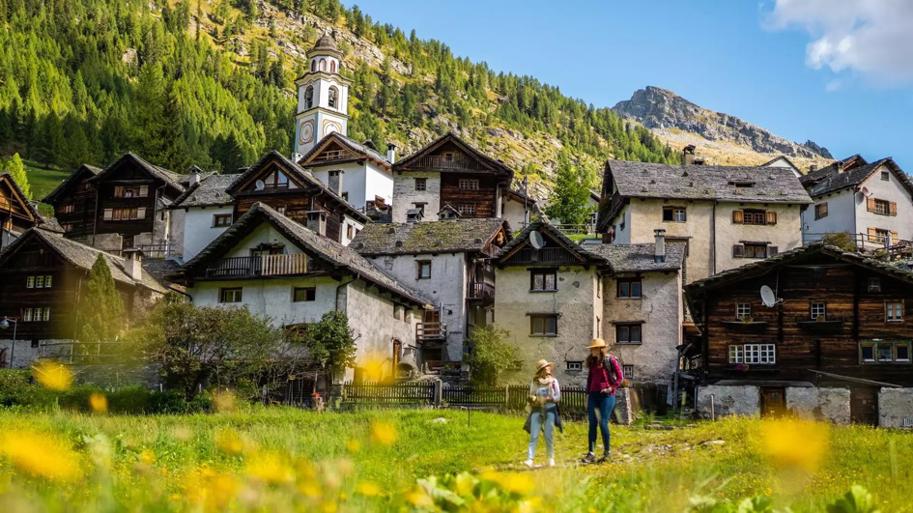
Bosco Gurin is often described as one of the most beautiful villages
in Ticino. Woodsmoke spools from chimneys, houses are painted with
allegorical scenes: a horse-riding angel spearing a crocodile; an ibex
haloed by a mountain. Stone streets lead to fountains where locals have
filled their buckets for centuries. It reminded me of a summer I spent
in Tibet, and the well-orchestrated modernity of Zurich and Basel felt
light years away.
Next day dawned to lingering mist, a white smear
on the mountaintops and no one on the trails. I had more stops to visit
and, picking up where I left off, turned to the Weltu forest, following a
trail alongside the Rovana River. I spent the best part of the morning
at the site where I would have overnighted, nursing a flask of coffee in
my hammock and listening to the rumbling cough of the river. With
binoculars, I scanned the trees for hawks.
The
wilderness that had so taken Sartori and first led her to thinking
differently about her own environment was now working on me. By
lunchtime, I’d climbed to higher ground, through the silent orchards
of Bawald-Wolfstaful, and along a ridgeway. For the rest of that
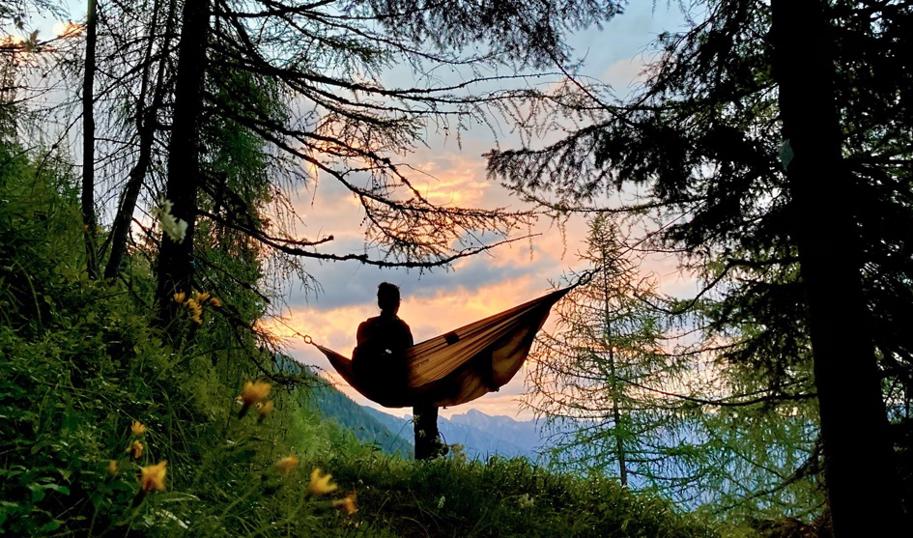
afternoon, my hammock – now attached to the underside of an obsolete
wooden avalanche shelter – was my bunk, my window on to the valley. And
for those final moments on the trail, the rest of the world was a mere
ripple in the distance.
Comments:
You must authorize to comment:





 Europe
 18.Mar.2024, 09:43, Locarno, Switzerland



 Add comment
 Edit
Edit Remove
 Like!
Like! Dislike


