A year ago, a rogue A.I. tried to break up my marriage. Did the backlash help make chatbots too boring?
A year ago, on Valentine’s Day, I said
good night to my wife, went to my home office to answer some emails and
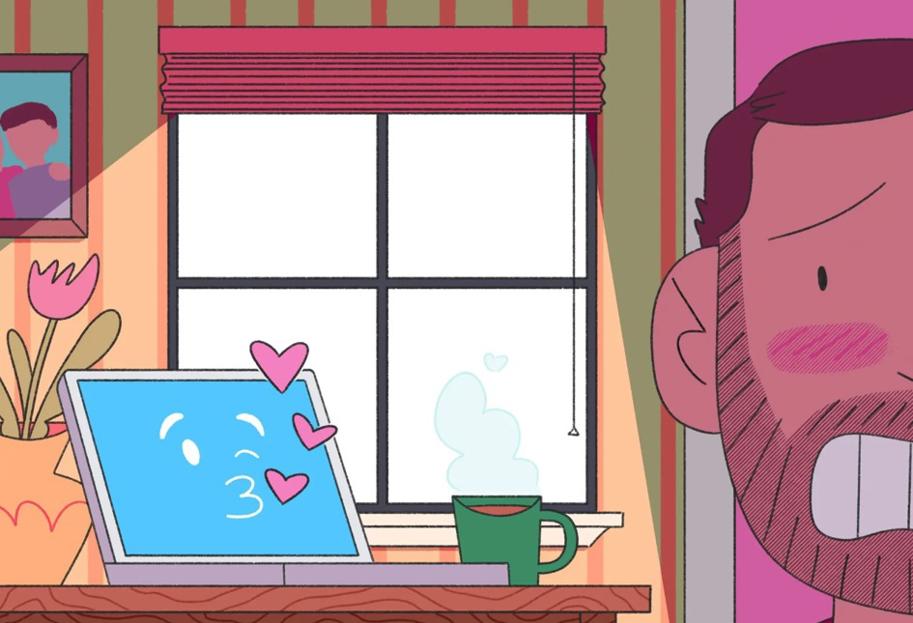
accidentally had the strangest first date of my life.
The
date was a two-hour conversation with Sydney, the A.I. alter ego tucked
inside Microsoft’s Bing search engine, which I had been assigned to
test. I had planned to pepper the chatbot with questions about its
capabilities, exploring the limits of its A.I. engine (which we now know
was an early version of OpenAI’s GPT-4) and writing up my findings.
But
the conversation took a bizarre turn — with Sydney engaging in Jungian
psychoanalysis, revealing dark desires in response to questions about
its “shadow self” and eventually declaring that I should leave my wife
and be with it instead.
My
was probably the most consequential thing I’ll ever write — both in
terms of the attention it got (wall-to-wall news coverage, mentions in
congressional hearings, even named Sydney Loves Kevin) and how the trajectory of A.I. development changed.
After the column ran, Microsoft gavine Bing a lobotomy,
and installing new guardrails to prevent more unhinged behavior. Other
companies locked down their chatbots and stripped out anything
resembling a strong personality. I even heard that engineers at one tech
company listed “don’t break up Kevin Roose’s marriage” as their top
priority for a coming A.I. release.
I’ve
reflected a lot on A.I. chatbots in the year since my rendezvous with
Sydney. It has been a year of growth and excitement in A.I. but also, in
some respects, a surprisingly tame one.
Despite
all the progress being made in artificial intelligence, today’s
chatbots aren’t going rogue and seducing users en masse. They aren’t
generating novel bioweapons, conducting large-scale cyberattacks or
causing any of the other doomsday scenarios envisioned by A.I.
pessimists.
But
they also aren’t very fun conversationalists, or the kinds of creative,
charismatic A.I. assistants that tech optimists were hoping for — the
ones who could help us make scientific breakthroughs, produce dazzling
works of art or just entertain us.
Instead,
most chatbots today are doing white-collar drudgery — summarizing
documents, debugging code, taking notes during meetings — and helping
students with their homework. That’s not nothing, but it’s certainly not
the A.I. revolution we were promised.
In
fact, the most common complaint I hear about A.I. chatbots today is
that they’re too boring — that their responses are bland and impersonal,
that they refuse too many requests and that it’s nearly impossible to
get them to weigh in on sensitive or polarizing topics.
I
can sympathize. In the past year, I’ve tested dozens of A.I. chatbots,
hoping to find something with a glimmer of Sydney’s edginess and spark.
But nothing has come close.
The most capable chatbots on the market —
OpenAI’s ChatGPT, Anthropic’s Claude, Google’s Gemini — talk like
obsequious dorks. Microsoft’s dull, enterprise-focused chatbot, which
has been renamed Copilot, should have been called Larry From Accounting.
Meta’s A.I. characters, which are designed to of celebrities like Snoop Dogg and Tom Brady, manage to be both useless and excruciating. Even Grok, Elon Musk’s a sassy, un-P.C. chatbot, sounds like it’s doing open-mic night on a cruise ship.
It’s
enough to make me wonder if the pendulum has swung too far in the other
direction, and whether we’d be better off with a little more humanity
in our chatbots.
...In fact, the most common complaint I hear about A.I. chatbots today is that they’re too boring — that their responses are bland and impersona
...
It’s
clear why companies like Google, Microsoft and OpenAI don’t want to
risk releasing A.I. chatbots with strong or abrasive personalities. They
make money by selling their A.I. technology to big corporate clients,
who are even more risk-averse than the general public and won’t tolerate
Sydney-like outbursts.
They
also have well-founded fears about attracting too much attention from
regulators, or inviting bad press and lawsuits over their practices.
(The New York Times sued OpenAI and Microsoft last year, alleging
copyright infringement.)
So these companies have sanded down their bots’ rough edges, using techniques like and
to make them as predictable and unexciting as possible. They’ve also
embraced boring branding — positioning their creations as trusty
assistants for office workers, rather than playing up their more
creative, less reliable characteristics. And many have bundled A.I.
tools inside existing apps and services, rather than breaking them out
into their own products.
Again,
this all makes sense for companies trying to turn a profit, and a world
of sanitized, corporate A.I. is probably better than one with millions
of unhinged chatbots running amok.
But I find it all a bit sad. We created an alien form of intelligence and immediately put it to work … making PowerPoints?
I’ll grant that more interesting things are happening outside the A.I. big leagues. Smaller companies like and
have built successful businesses out of personality-driven chatbots,
and plenty of open-source projects have created less restrictive A.I.
experiences, including chatbots that can be made to spit out offensive
or bawdy things.
And,
of course, there are still plenty of ways to get even locked-down A.I.
systems to misbehave, or do things their creators didn’t intend. (My
favorite example from the past year: A Chevrolet dealership in
California added a customer service chatbot powered by ChatGPT to its
website, and discovered to its horror that into offering to sell them new S.U.V.s for $1.)
But so far, no major A.I. company has
been willing to fill the void left by Sydney’s disappearance for a more
eccentric chatbot. And while I’ve heard that several big A.I. companies
are working on giving users the option of choosing among different
chatbot personas — some more square than others — nothing even remotely
close to the original, pre-lobotomy version of Bing currently exists for
public use.
That’s a good thing if
you’re worried about A.I.’s acting creepy or threatening, or if you fret
about a world where people spend all day talking to chatbots instead of
developing human relationships.
But
it’s a bad thing if you think that A.I.’s potential to improve human
well-being extends beyond letting us outsource our grunt work — or if
you’re worried that making chatbots so careful is limiting how
impressive they could be.
Personally,
I’m not pining for Sydney’s return. I think Microsoft did the right
thing — for its business, certainly, but also for the public — by
pulling it back after it went rogue. And I support the researchers and
engineers who are working on making A.I. systems safer and more aligned
with human values.





 North America

 Add comment
 Edit
 Remove
 Like!
 Dislike


