Deals, drama and danger: the incredible true story behind Tetris
When he looks back on it now – gambling his house, battling Robert Maxwell, turning up in the Soviet Union on a wingand a prayer – Henk Rogersstill insists that he never considered giving up. “People ask me how much naivety was involved?” he recalls. “I would say 20% naivety/stupidity and 80% determination.”
That may be the key to success in many aspects of life. In Rogers’s case, he was a video game publisher who knew he had discovered the next big thing: Tetris, a strangely addictive puzzle in which players must arrange falling bricks of differing shapes to form a solid wall.
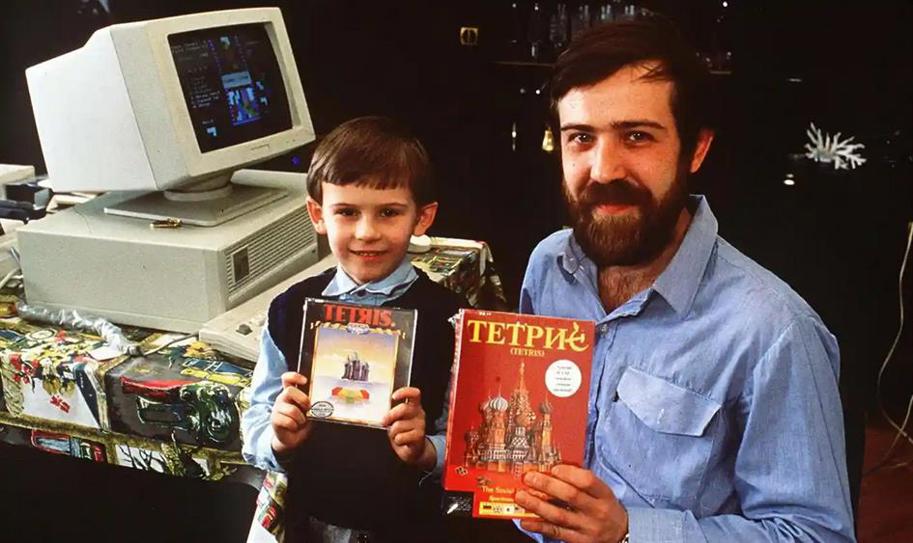
In 1984 Pajitnov was working as a software engineer in a computer centre at the Soviet Academy of Sciences in Moscow. Testing a new computer, he wrote a simple game based on a puzzle from his childhood that involved fitting different-shaped blocks into a grid.
He says: “Basically, at one point I realised that this is a very good game. When I got myself hooked on it for a couple of weeks without doing any other job I needed to perform in my computer centre, I realised that it’s something. But I never expected that big.”
...Basically, at one point I realised that this is a very good game.
...





 North America
 15.Mar.2023, Austin, United States


 Add comment
 Edit
 Remove
 Like!
 Dislike


