


 North America
A sharp, current look at renewed federal budget tensions and why brinkmanship politics is entering a more volatile phase in 2026.


Write



 Ernst Birkholz
Follow
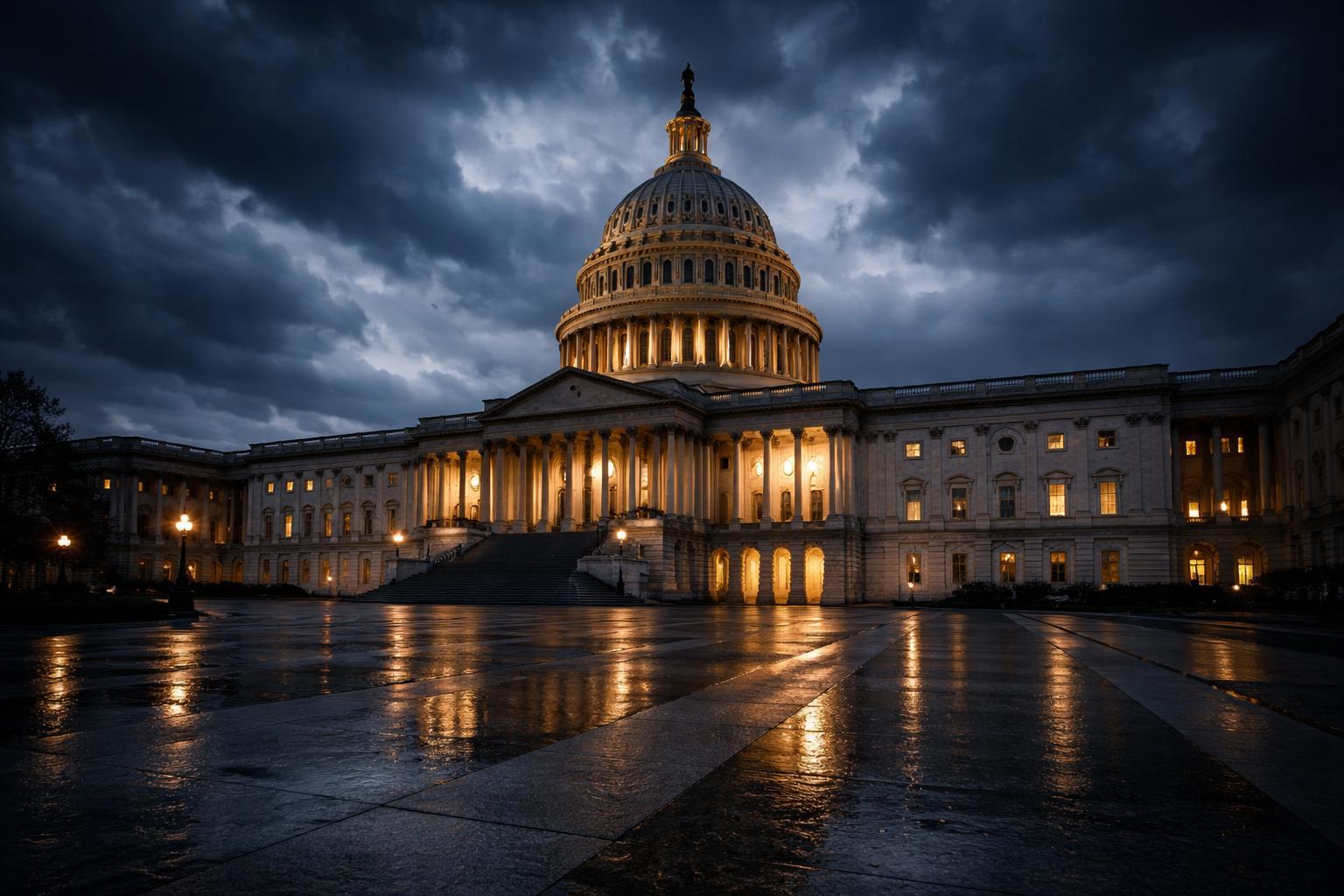
 28.Mar.2026, Vašingtona, Kolumbijas apgabals 20510, Amerikas Savienotās Valstis
A sharp, current look at renewed federal budget tensions and why brinkmanship politics is entering a more volatile phase in 2026.
Washington has always had a taste for brinkmanship, but this year’s federal budget standoff feels less like ritual and more like erosion. The outlines are familiar: deadlines, competing spending visions, late-night negotiations, and the looming possibility that parts of the federal government could grind to a halt. Yet beneath the choreography, something has changed. The confidence that these crises will resolve themselves at the last minute—without lasting damage—is beginning to thin.
At the center of the current fight is not just how much to spend, but what spending represents in a country that has grown more economically anxious and politically fragmented. Fiscal conservatives are pressing harder than usual for spending cuts tied to deficit concerns, while others argue that reducing federal investment now risks amplifying instability in everything from infrastructure to public health. These positions are not new. What is new is the shrinking space between them.
Inside Congress, the mechanics of compromise have become more brittle. Leadership on both sides is navigating factions that are less willing to accept incremental wins and more inclined to treat any concession as a loss. That dynamic turns routine budgeting into a test of ideological endurance. Deals are no longer just negotiated—they are survived.
Outside Washington, the stakes are easier to understand. A shutdown does not arrive as an abstraction. It shows up in delayed paychecks for federal workers, stalled services, uncertainty for contractors, and a quiet but real drag on local economies tied to government activity. Over time, repeated crises create a background noise of instability that businesses and households learn to expect—and quietly factor into their decisions.
What makes this moment sharper is the broader economic backdrop. Inflation has cooled compared to its peak, but it has not disappeared from public memory. Interest rates remain a topic of daily conversation. Housing affordability continues to strain middle-income households. In that environment, a government that appears unable to manage its own finances risks reinforcing a deeper narrative: that the system is no longer capable of steady stewardship.
There is also a generational shift underway in how Americans interpret political conflict. Younger voters, in particular, tend to view repeated shutdown threats less as tactical maneuvers and more as evidence of structural dysfunction. That perception matters because it shapes long-term trust. A government that constantly approaches the edge of closure begins to look less like a stable institution and more like a recurring crisis.
For lawmakers, the temptation is to treat this standoff like the ones that came before it: hold firm, negotiate late, declare partial victory, move on. But the cumulative effect of these cycles is becoming harder to ignore. Each near-miss adds weight to the next one. Each delay reinforces the idea that governance is something that happens despite the system, not because of it.
The deeper question is not whether a deal will be reached. It probably will. The question is what kind of precedent that deal sets. If the resolution relies on the same last-minute improvisation, the underlying instability remains intact. If it reflects a more durable framework—clearer priorities, fewer artificial deadlines—it could begin to restore some measure of predictability.
Washington still has the capacity to govern effectively. But capacity is not the same as habit. Right now, the habit is crisis. And habits, once formed, are difficult to break.

© 2026 - ossLand, v.2.17

 Add comment
 Edit
 Remove
 Like!
 Dislike


